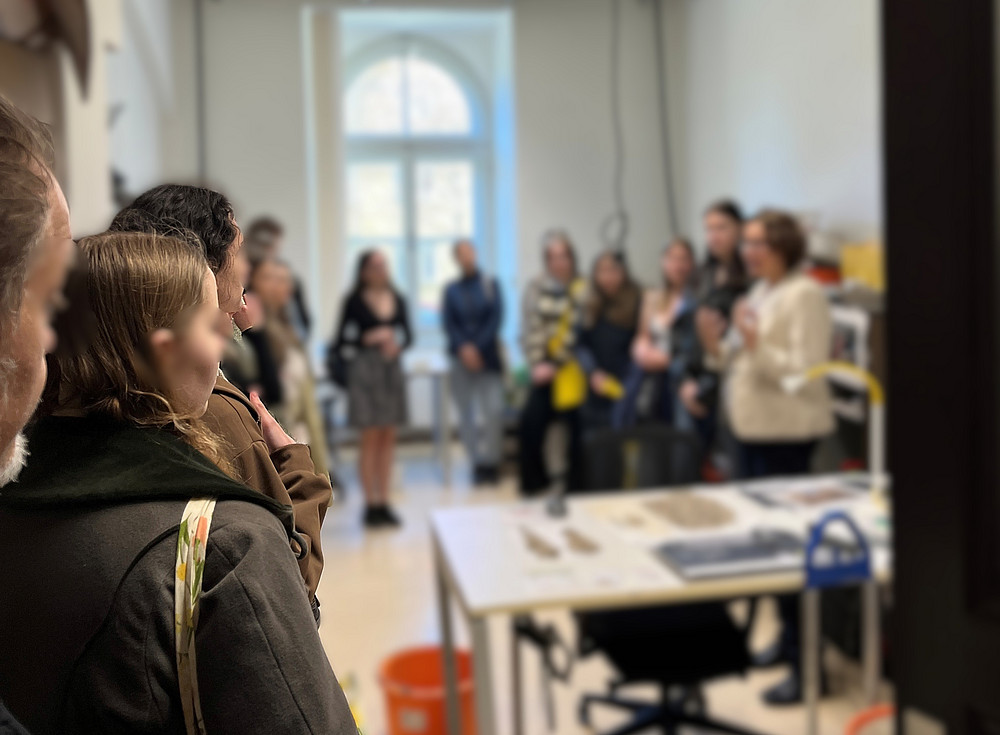
This year’s University of Graz Open House was a vibrant celebration of scientific curiosity and exploration, and we were delighted to be part of it. Edeltraud Aspöck, Eliza Orellana-González, and Laura Elmer organised two workshops introducing to the world of archaeology through the research of the PresentDead project and with a focus on its bioanthropology and digital archaeology. What truly surprised us was the turnout: both workshops attracted 20 enthusiastic participants each, all keen to dive into the world of archaeology and digital innovation!
The day itself was wonderfully organised, with hourly opportunities to explore different study programs via workshops. Attendees planned their path, selecting sessions of interest, and gathered at designated meeting points where guides brought them to the right rooms. It was a bustling, dynamic environment and we were grateful that so many chose our workshop.
Our workshop began with Edeltraud, who provided a captivating introduction to the PresentDead Project, highlighting the broader goals and the importance of archaeology in understanding human history. Pupils were fascinated as she showcased finds from our excavations at Achau, such as a small rivet, and explained the intricacies of sediment sorting and artifact identification. Seeing a tangible piece from the excavation brought the subject to life for many.
Next, Eliza took over, introducing participants to the complex field of archaeothanatology within biological anthropology. The field that focuses on the analysis of human remains in their burial context and the different changes through decomposition. She had prepared a skeleton from Achau, and participants were intrigued by the coloration of the bones, learning how such features can reveal stories about burial context, environmental conditions, and more.
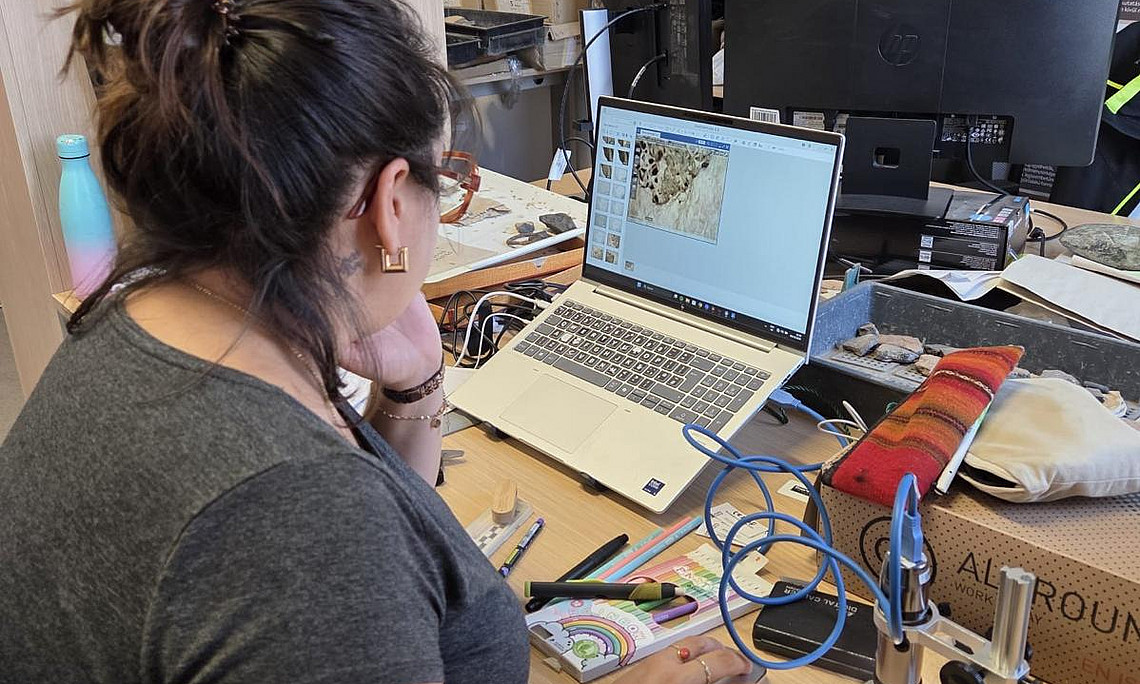
Finally, Laura explored the cutting-edge digital strategies we employ in the PresentDead Project. From 3D modelling to advanced GIS mapping, she demonstrated how technology is revolutionising archaeological research. Pupils could see how 3D models and 3D GIS could help visualise and analyse excavation data with unprecedented detail.
The lively questions and engagement from our audience were a joy. Many pupils were surprised by how interdisciplinary archaeology is, blending traditional hands-on methods with modern digital tools.
We left the workshops energised and hopeful, eager to welcome more inquisitive minds into our field!
Laura Elmer and Eliza Orellana-González